 You are browsing our UK website.
Visit our USA site
You are browsing our UK website.
Visit our USA site
You are browsing our UK website.
Visit our USA site
You are browsing our UK website.
Visit our USA site
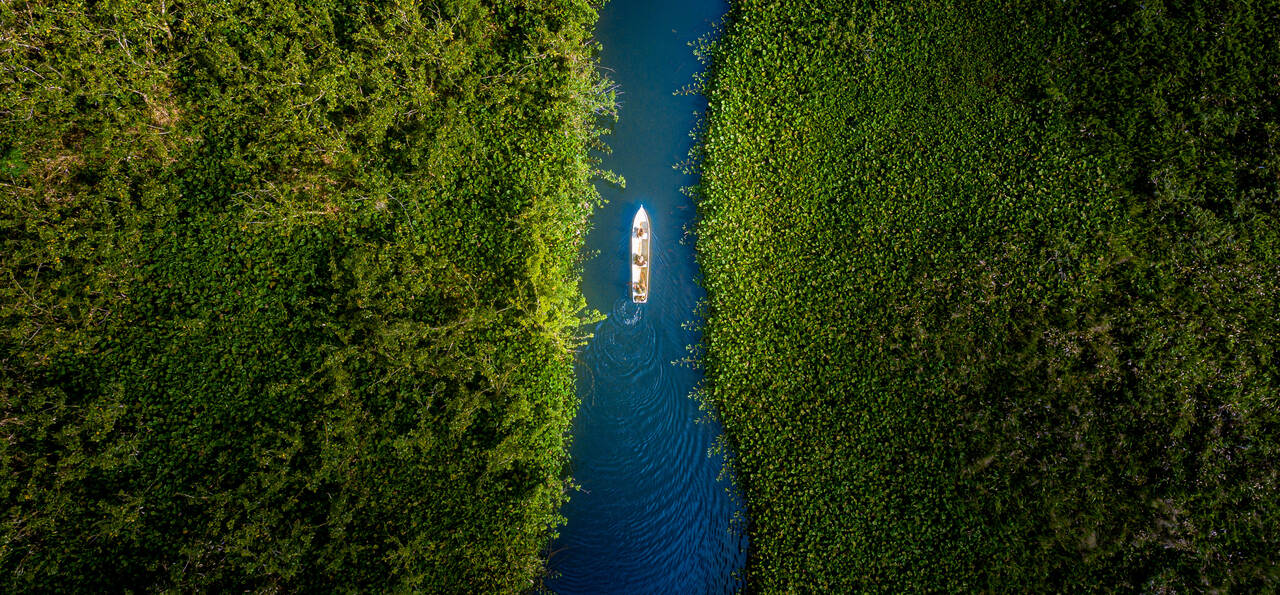

Tucked away in the far south-west of Costa Rica, the Osa Peninsula feels like a world apart. Flanked by the warm waters of the Pacific Ocean and carpeted in dense tropical rainforest, it lies across the Golfo Dulce from the country’s more travelled central regions. Reaching the Osa takes intention – a boat ride, a light aircraft or a long drive along rural roads – and it is precisely this sense of remoteness that defines its appeal.
Often described as one of the most biologically intense places on Earth, the Osa Peninsula stands apart from other areas of Costa Rica for its sheer wilderness. Vast tracts of untouched rainforest, miles of undeveloped coastline and a commitment to conservation have preserved a rare sense of raw, unfiltered nature. For travellers seeking Costa Rica at its most authentic, the Osa delivers something increasingly hard to find: true immersion in the natural world.
At the centre of the peninsula lies Corcovado National Park, widely regarded as the jewel in Costa Rica’s conservation crown. Covering a significant portion of the Osa, Corcovado protects some of the largest remaining areas of lowland rainforest in Central America and plays a crucial role in the country’s environmental story.
This is a place where ecosystems converge. Primary rainforest, cloud forest, mangroves, rivers and beaches coexist within a single protected area, creating extraordinarily rich habitats. Guided walks through the park reveal towering trees draped in vines, forest floors alive with insects and amphibians, and distant howler monkeys announcing their presence from the canopy.
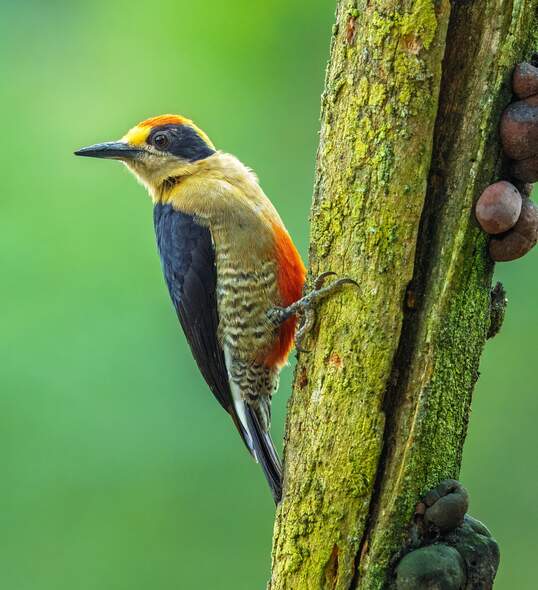
Wildlife viewing in Corcovado is exceptional. It is one of the few places in Costa Rica where all four species of monkey can be found, alongside tapirs, peccaries and countless bird species. The park is also known as one of the best areas in the country where visitors may, with luck and expert guiding, encounter the elusive jaguar – a powerful symbol of the Osa’s untamed character.
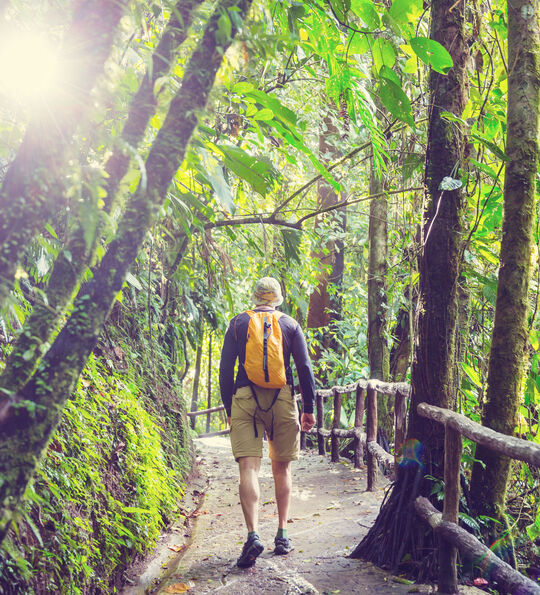
Hiking in Corcovado National Park, Costa Rica
What makes the Osa Peninsula truly unique is the seamless connection between rainforest, coastline and ocean. On land, biodiversity is staggering, but the surrounding waters are equally rich. Offshore reserves and protected marine environments support vibrant underwater ecosystems and seasonal migrations.
Boat trips along the coast often reveal dolphins riding the bow waves, while humpback whales pass through these waters at different times of year, using them as breeding and calving grounds. Sea turtles nest on remote beaches, and countless seabirds patrol the shoreline.
Snorkelling and diving open another window into the region’s natural abundance. Coral reefs, schooling fish and larger pelagic species thrive in clear Pacific waters, reinforcing the Osa’s reputation as one of Costa Rica’s most diverse destinations, both above and below the surface.
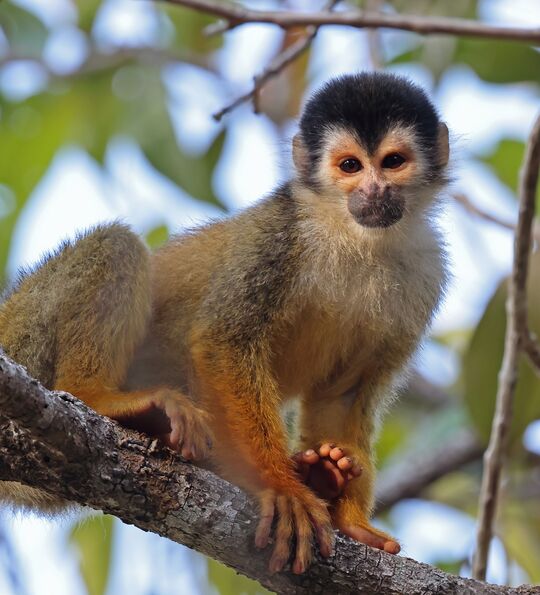
Central American Squirrel Monkey
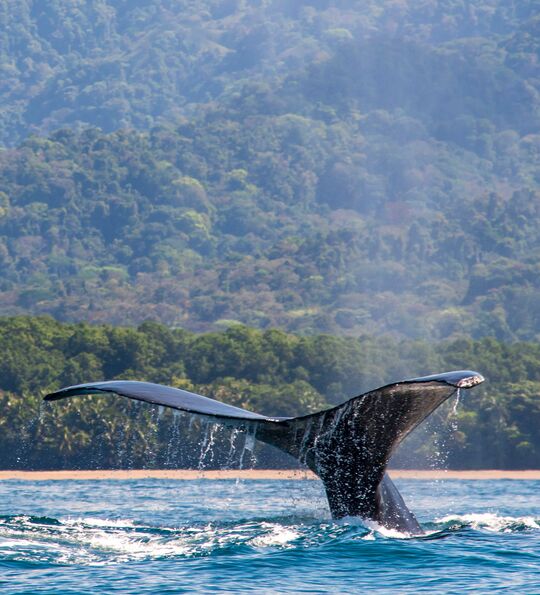
Humpback whale passing the Osa Peninsula in Costa Rica
While Corcovado may be the heart of the peninsula, the surrounding communities provide welcoming gateways into this wild landscape. Drake Bay and Puerto Jiménez serve as the main access points, each with its own relaxed rhythm and close relationship with the environment.
From here, travellers can explore the peninsula through carefully managed, low-impact experiences. Guided rainforest walks led by local naturalists offer insight into medicinal plants, animal behaviour and the interconnectedness of ecosystems. Offshore, Caño Island Biological Reserve is a highlight, renowned for its snorkelling and diving thanks to healthy reefs and clear waters.
Kayaking through mangroves, boat-based wildlife excursions and quiet beach explorations round out the experience. The emphasis throughout is on sustainability and respect for nature, allowing visitors to engage deeply while keeping environmental impact to a minimum.
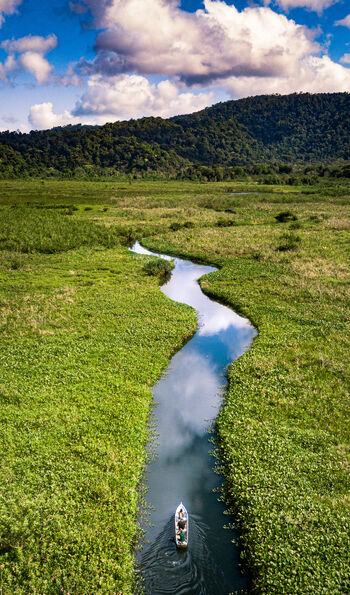
Mangroves in Osa Peninsula, Costa Rica
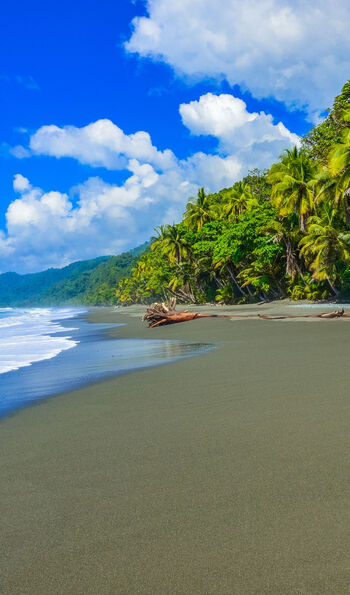
Wild beach in Corcovado Rainforest, Costa Rica
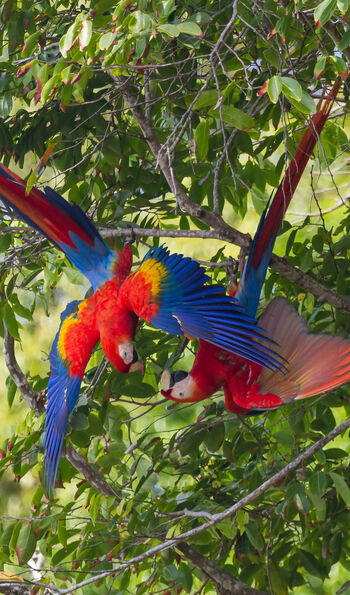
Scarlet Macaws in Osa Peninsula
As global travel trends shift, the Osa Peninsula feels perfectly aligned with what many travellers are seeking today. There is growing interest in travel where meaningful experiences take centre stage and with destinations that prioritise conservation over mass tourism. The Osa offers all of this in abundance.
In contrast to more developed parts of Costa Rica, the peninsula remains refreshingly uncrowded. Accommodation tends to be small-scale and thoughtfully designed, blending into the surrounding environment rather than dominating it. Days are shaped by nature rather than schedules, encouraging travellers to slow down and reconnect.
For those looking to go beyond the familiar highlights and experience the country’s wilder side, the Osa Peninsula stands as a compelling alternative – a place where authenticity is preserved, and nature truly comes first.
The Osa Peninsula represents Costa Rica at its most elemental: dense rainforest alive with wildlife, pristine coastline and a deep-rooted commitment to conservation. It is a destination for travellers who want to experience the country not as a checklist of sights, but as a living, breathing ecosystem.
To visit the Osa is to step into a world where nature sets the pace and human presence is carefully balanced with protection. By travelling responsibly and supporting conservation-led tourism, visitors play a role in safeguarding this extraordinary region – ensuring that Costa Rica’s wildest corner remains just that for generations to come.