 You are browsing our UK website.
Visit our USA site
You are browsing our UK website.
Visit our USA site
You are browsing our UK website.
Visit our USA site
You are browsing our UK website.
Visit our USA site
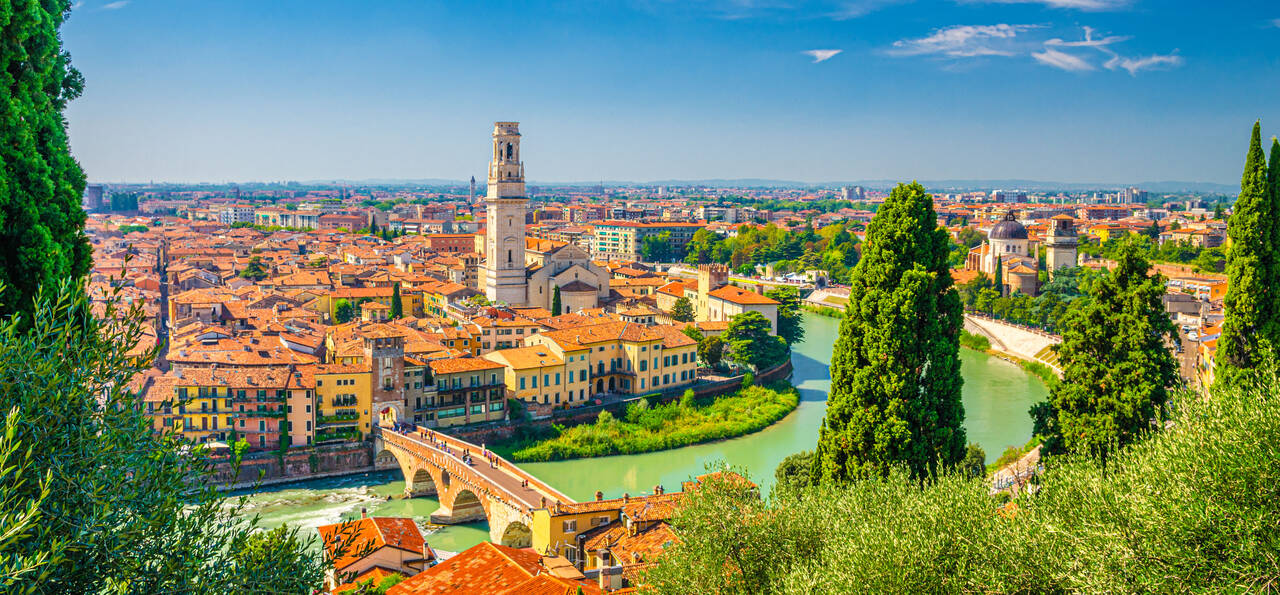

There are few better places to find yourself twice in the space of a month than Verona. The city has a way of getting under your skin without demanding too much of you. It is beautiful, certainly, and impossibly rich in history, but it is also remarkably easy to live in for a few days. You can walk almost everywhere, stop for a coffee or a glass of wine whenever the mood takes you, eat extremely well and still have time to sit down and watch the city go about its business.
This summer, I had the opportunity to visit Verona twice. My first visit was a two-night stay exploring the city and experiencing one of its great summer traditions: opera at the Arena di Verona. A month later, I returned for one night before boarding the Venice Simplon-Orient-Express for an overnight journey to Paris. The two trips were very different, but together they made for a memorable combination of Italian food and wine, history, opera, luxury hospitality and, ultimately, one of the most famous train journeys in the world.
My first journey began with a direct flight from Birmingham to Verona, followed by a straightforward taxi ride from the airport into the city. Around 20 minutes and €30 later, I was checking into the Due Torri, and it was immediately apparent that this was going to be a rather more interesting hotel experience than the average five-star city stay.
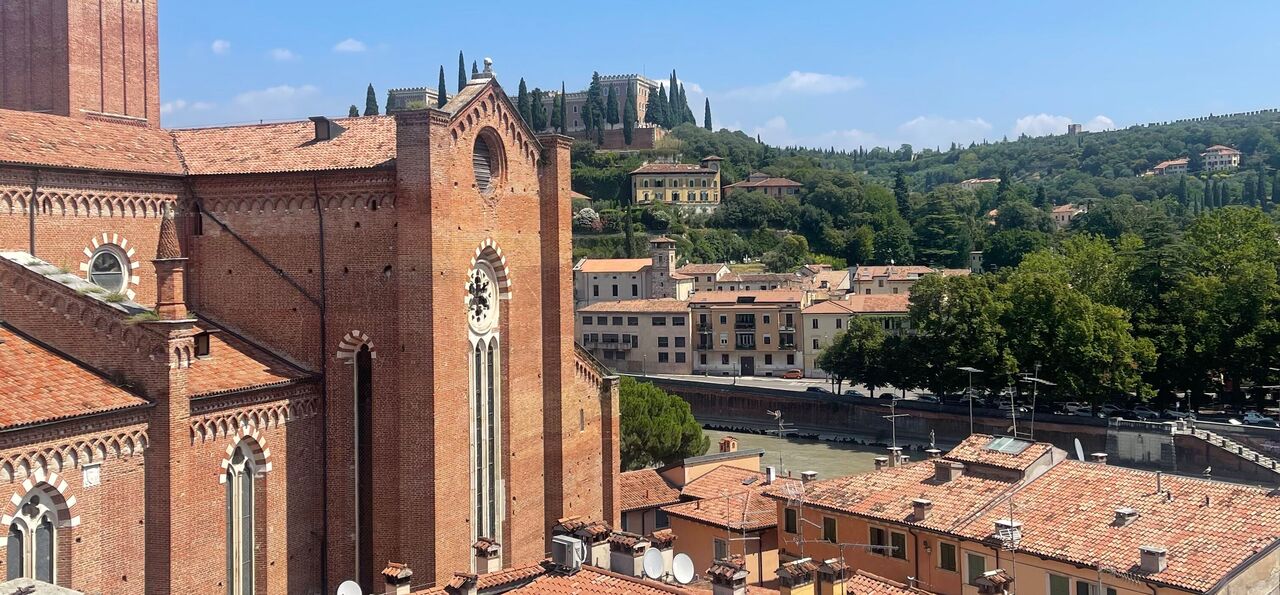
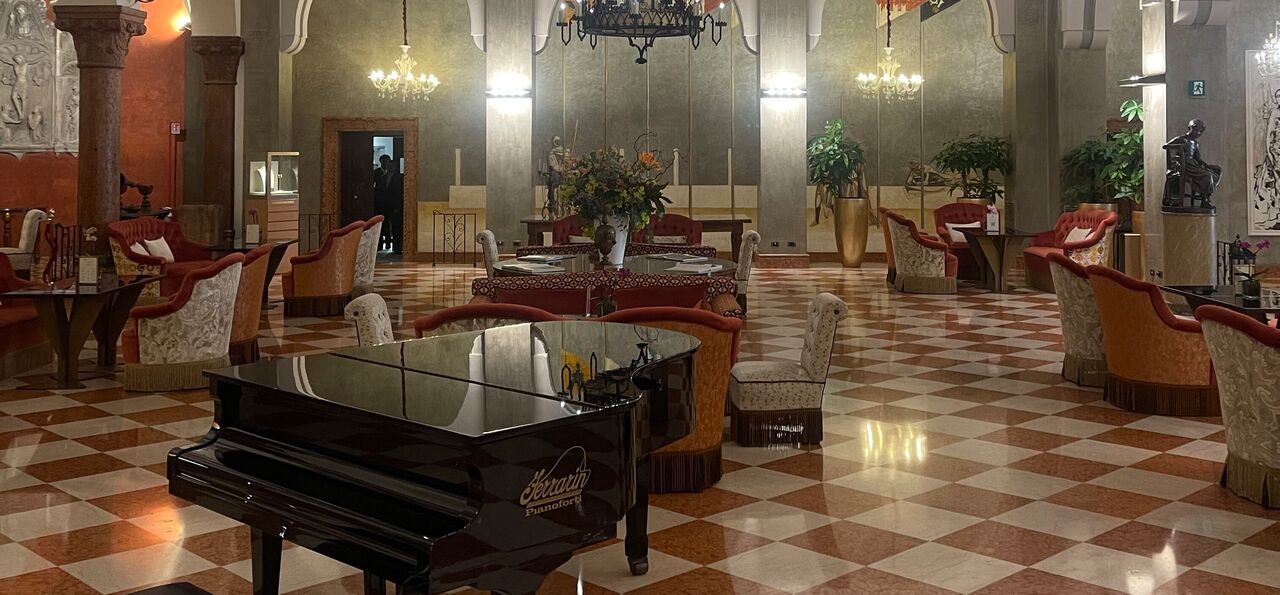
The Due Torri sits directly opposite the Basilica of Sant'Anastasia, right in the heart of Verona's historic centre. The building dates back to the 14th century and became an inn in 1674, so it has had several centuries to acquire the sort of character that no amount of interior design can manufacture. The hotel has hosted figures including Mozart and Goethe, and its traditional interiors, period furnishings and ornate details give it the atmosphere of a historic Veronese residence rather than a conventional luxury hotel. That location is particularly useful in Verona. The city centre is compact and extremely walkable, so once you have arrived there is very little reason to spend your time getting into cars or navigating public transport. The Arena, Piazza delle Erbe, the Adige and many of the city's historic streets are all within easy reach.
After checking in, I headed out to explore. There is something very satisfying about arriving somewhere like Verona and resisting the temptation to immediately start ticking off a list of sights. The best way to understand the city is to walk, preferably without too much of a plan, and allow the streets to do the work. Naturally, this eventually led to gelato. I stopped at Gelateria Ponte Pietra, close to the ancient Roman bridge, for what turned out to be an excellent excuse to sit down for a while before continuing my wander through the city. That evening, after freshening up, we met the rest of our group for drinks and dinner in the hotel. It was a relaxed start to the trip and gave everyone the chance to get acquainted before the following day's opera experience.
The second day began at a more leisurely pace, with breakfast at the hotel before we headed out for a few glasses of wine and a lunch of cicchetti. We ate at Antica Bottega del Vino, one of Verona's great wine institutions, and walking inside feels rather like discovering that someone has converted an exceptionally serious wine cellar into a restaurant. The walls are lined with bottles and the wine list is enormous. Calling it a wine list feels almost inadequate; it is closer to a small religious text.
The Bottega has roots stretching back centuries, and its present character reflects that history. The wood-panelled interiors, old-fashioned furnishings and wine-bottle chandeliers give it the feel of somewhere that has been accumulating stories for generations rather than somewhere designed to look historic. Its cellar is the real showstopper, containing thousands of bottles and an extraordinary breadth of labels from around the world.
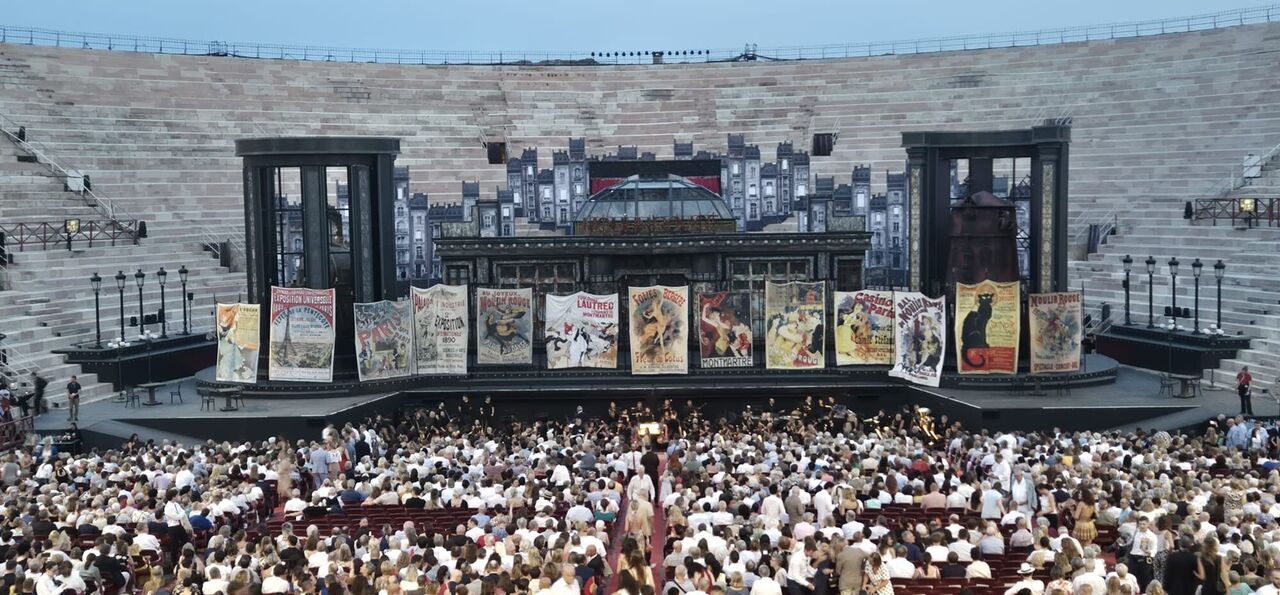
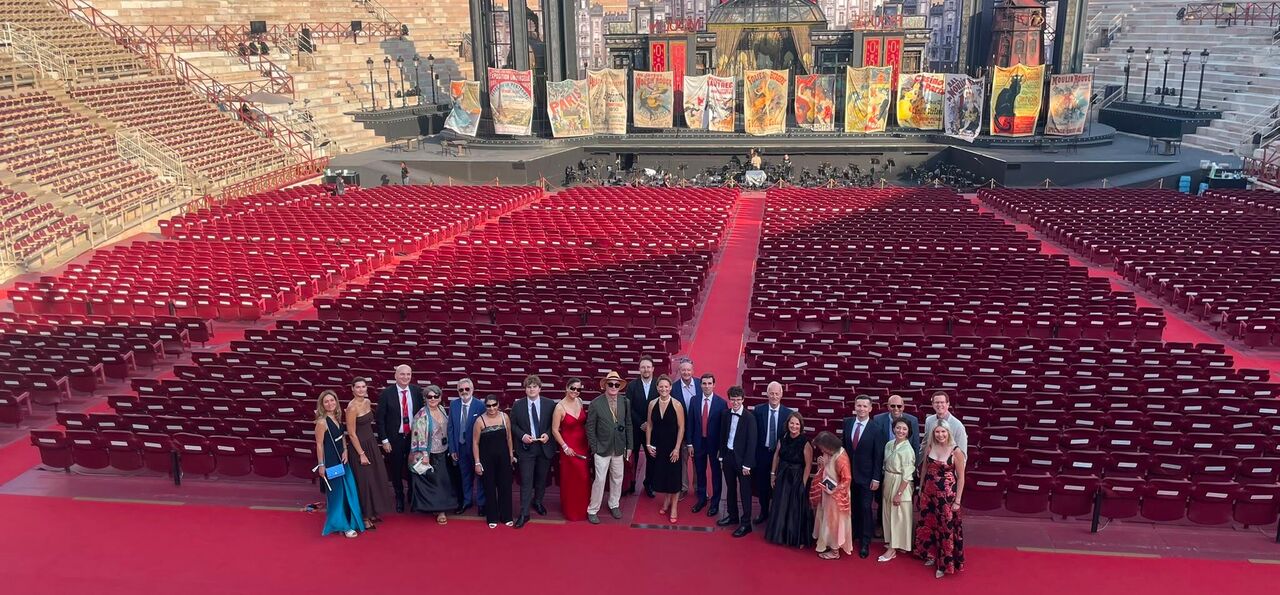
We enjoyed a selection of cicchetti alongside the wine, giving us the chance to sample a variety of smaller dishes rather than committing ourselves to one enormous plate. It was exactly the sort of lunch that works particularly well in Italy: good food, good wine, plenty of conversation and no particular reason to hurry. That evening, we experienced the Star Roof at the Arena di Verona. It is an exclusive experience combining a private backstage visit, a fine-dining experience and premium seating for the opera, and it turned out to be one of the highlights of the entire trip. Before the performance, we were given a private tour backstage at the Arena. This was particularly interesting because it revealed the enormous amount of work involved in staging an opera on such a scale. We saw the costume makers and make-up artists and were able to get a glimpse of the people and processes that most of the audience never sees. From the auditorium, the Arena can seem almost timeless. Backstage, you are reminded that there is a huge modern production operation working behind the scenes to make the performance possible, with hundreds of people contributing to what the audience eventually sees for a few hours that evening.
Then came dinner. The menu was created by Emanuele Scarello of Agli Amici 1887, the two-Michelin-starred restaurant in Friuli, and the setting was extraordinary. Dining inside the Arena, surrounded by its ancient stone architecture, is not something you are likely to forget quickly. There was a slight sense of unreality to the whole evening: fine dining in an almost 2,000-year-old amphitheatre, with an opera waiting to begin. At 9pm, we took our seats in the Royal Box for La Traviata.
July in Verona is hot. Very hot. The Arena is not an air-conditioned theatre, and sitting inside a vast stone amphitheatre on a summer evening is certainly an experience in itself. But the heat is also part of what makes the evening feel so different from a conventional night at the opera. As the sun disappeared and the Arena began to glow, the scale of the building became even more impressive. Thousands of people settled into their seats, the orchestra began and suddenly the fact that you were sitting inside an ancient Roman amphitheatre watching La Traviata seemed almost impossible. It was one of those evenings where the setting is every bit as important as the performance.
The following morning, we joined a guided city tour to explore more of Verona and its history. The city is something of a historical layer cake. Roman remains sit alongside medieval buildings, Renaissance architecture and the grand palaces associated with the Scaliger family. Piazza delle Erbe remains one of the central meeting points of the city, while the Arena is the obvious reminder of Verona's Roman origins.
Then, of course, there is Shakespeare. Juliet's Balcony is now one of Verona's most famous attractions, and whether or not you are particularly interested in the romantic mythology surrounding Romeo and Juliet, it is impossible to ignore the role the story has played in shaping the city's identity. Verona has embraced the association wholeheartedly, and millions of visitors arrive each year to see the balcony and leave their own small mark on the story. The tour provided a useful introduction to the city beyond the postcard views, giving us a better understanding of how Verona's different historical periods have shaped what you see today.
For lunch, I headed to Locanda 4 Cuochi, tucked away on Via Alberto Mario, just behind the Arena and a stone's throw from Piazza Bra. It is a much more relaxed proposition than some of Verona's grander restaurants, which is part of its appeal. The restaurant was established in 2012 by four friends who trained under Verona's only 3 Michelin star chef - Perbellini and wanted to create a modern, informal restaurant centred around good Italian cooking in the historic heart of Verona. It made for a very good final lunch in Verona: excellent food, a central location and a welcome change of pace after the rather more elaborate evening we had experienced at the Arena.
After lunch, I returned to the Due Torri and headed up to the hotel's panoramic rooftop terrace for a cocktail and some time to unwind. Around 30 metres above the historic centre, the 300-square-metre terrace has some of the best views in Verona, looking across the rooftops towards the Torre dei Lamberti, the Duomo, Castel San Pietro, the Torricelle hills and the Adige. With a late flight home, it was the perfect place to spend the afternoon. Sitting with a drink, watching the city below and taking in the views, there was no need to rush off and squeeze in another sight. Eventually, a private transfer collected me directly from the hotel and took me to Verona Airport for my flight home. After two busy days of sightseeing, food, wine and opera, it was exactly what was needed. Sometimes the best way to finish a city break is to stop trying to experience the city and simply enjoy being there.
A month later, I found myself back at the Due Torri. This time, I wasn't returning for another opera evening. Rather, I was in Verona because I was about to board the Venice Simplon-Orient-Express and travel overnight to Paris. I stayed in the same Classic Room at The Due Torri as on my previous visit, which made the return feel surprisingly familiar. The room was spacious and traditionally decorated, and there was a fruit basket waiting for me on arrival. The staff also remembered me from my previous stay and gave me a particularly warm welcome. That sort of personal touch can make a real difference. Luxury hotels can obviously provide beautiful rooms and excellent facilities, but being remembered when you return creates something much more difficult to manufacture and speaks to the levels of hospitality at the Due Torri.
With only one night in Verona this time, I wanted to make the most of being back in the city and after checking in, headed straight to Taverna di Via Stella for lunch. Tucked away on one of Verona's historic streets, the restaurant has a distinctly traditional feel, with a menu rooted in the cooking of the Veneto and a good selection of local wines. I opted for one of the more distinctive regional dishes: gnocchi with horse-meat ragù. Horse meat has long featured in Veronese cooking, and while it may not be something you encounter regularly at home, the dish was genuinely delicious — rich, hearty and full of flavour. It was another reminder of how easy it is to eat well in Verona. Even with only one evening, you don't have to look far to find traditional food, good wine and a restaurant with a few centuries of history around the corner.
That evening also reinforced what I had enjoyed about Verona on my first visit. It is remarkably easy to settle into. It feels like a proper working Italian city rather than a collection of sights arranged for tourists, and its compact centre makes it particularly enjoyable to explore on foot. The next morning, however, it was time to leave the city behind.
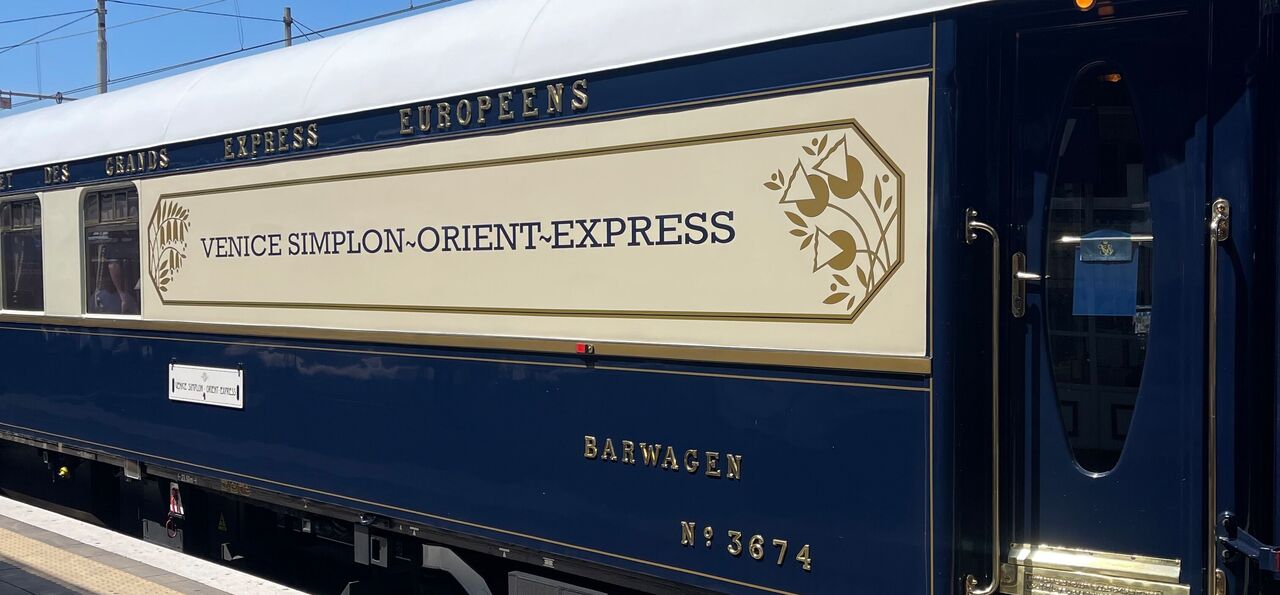
In the morning, Belmond had arranged a driver to collect us from the Due Torri and take us to Verona Porta Nuova. It was a remarkably short journey - less than ten minutes - but the convenience of being collected directly from the hotel made the whole departure completely seamless. The train was slightly late arriving into Verona, and there is no dedicated Belmond lounge at the station, but the Belmond representative did an excellent job of making the wait as comfortable as possible. He found us somewhere to sit, brought us some drinks and then took us to the platform so we could watch the train arrive.
There is something quite special about seeing the Venice Simplon-Orient-Express arrive at a station for the first time. The famous blue-and-cream carriages rolled into Verona and, for a moment, it felt as though the last hundred years had been politely ignored. We were welcomed aboard and shown to our Historic Cabins. There are, of course, more luxurious options – the Suites and Grand Suites offer considerably more space and the advantage of private bathrooms – but I couldn't have been happier with my Historic Cabin. The bathroom was just down the corridor, and I actually found that I preferred the character of the cabin to the additional facilities offered by the more expensive accommodation. The Art Deco interiors, original details and individual character of the Historic Cabins make them feel authentic in a way that is difficult to reproduce. If you are travelling on the Orient-Express, part of the appeal is surely the feeling that you have stepped into another era. For me, the Historic Cabin delivered that perfectly.
Once aboard, lunch was served. We began with bluefin tuna, followed by veal spaghetti served on a bed of aubergine, and finished with an Eton Mess-style dessert of biscuit crumb, strawberries and Chantilly cream. The food was beautifully presented without losing sight of the fact that you were, after all, eating on a moving train.
Dinner was an altogether more elaborate affair. The first course was a soft-boiled egg inside a veal-stock gelatine, served with caviar and crème fraîche. The flavours were interesting, although the texture wasn't quite to my taste. Fortunately, the next course was considerably more familiar territory: a deconstructed beef Wellington. Dessert arrived in the shape of an Orient-Express carriage, made from sponge with raspberry and cream filling. A cheeseboard followed, and I finished with Roquefort and fig preserve.
Caviar was something of a recurring theme throughout the journey. It appeared at dinner and, rather wonderfully, would make another appearance at brunch the following day. This is certainly not a train where you are encouraged to count calories.
After dinner, we headed to the Bar Car. This is probably the carriage most people imagine when they picture the Orient-Express: elegant surroundings, a baby grand piano and soft jazz playing throughout the evening. We arrived at around 11pm after our late dinner sitting and were fortunate enough to find a seat. The atmosphere was relaxed but still felt like an occasion. Black tie was the order of the evening, with passengers dressed for dinner, drinks flowing and the train continuing its journey through the darkness outside. It was the sort of evening where you could make an effort without worrying about having made too much of an effort.
There was something about sitting there as the train continued through the night that made the journey feel like the destination itself. There was nowhere else we needed to be, no station to reach and no taxi waiting outside. The train was moving, the music was playing and the evening could simply continue at its own pace – that, ultimately, is what makes the Venice Simplon-Orient-Express so different.
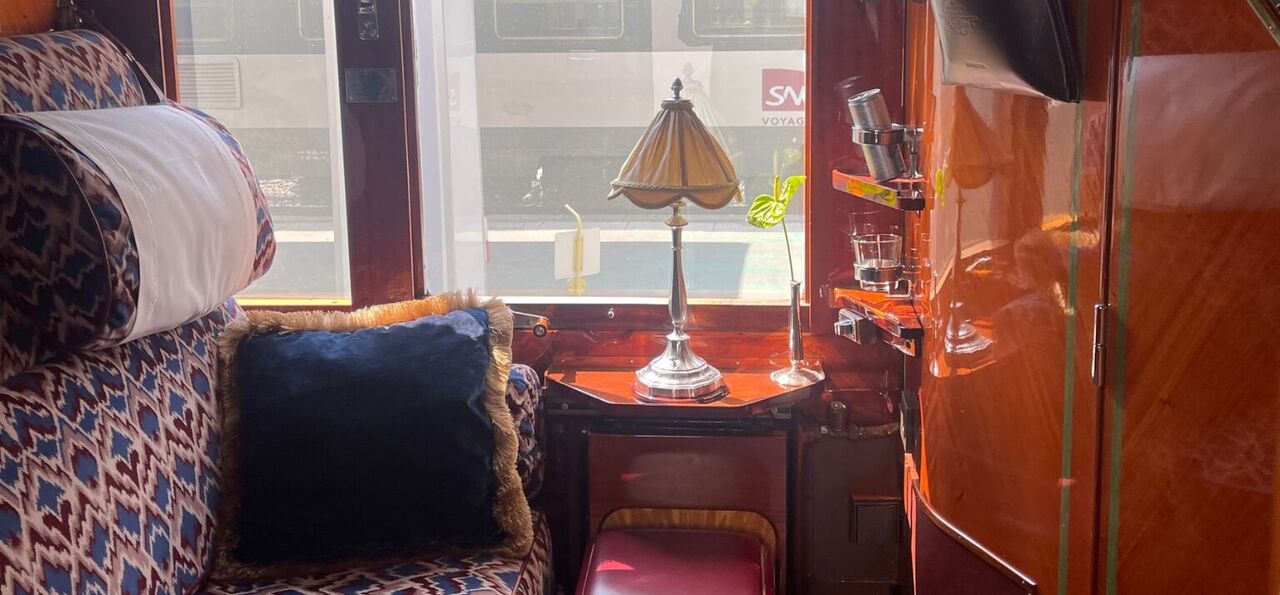
Eventually, it was time to return to the cabin. When I arrived back, the seating configuration had been transformed into a comfortable bed, with the cabin having been beautifully prepared for the night. I wasn't sure what to expect from sleeping on a train in August, but I was genuinely surprised by how comfortable it was. The cabin had both a fan and air conditioning, and the window could be opened to let the breeze in as the train travelled through Austria and Switzerland. There was something wonderfully peaceful about the gentle movement of the carriage and the sound of the train travelling through the night.
The following morning, I decided there was no reason whatsoever to set an alarm. I woke just after 9am, at which point my cabin attendant Loic came to the cabin and transformed the bed back into its seating configuration. He brought pastries, juice, jams, berries and coffee, before confirming my brunch sitting for 11.45am. Brunch was, predictably, not particularly restrained, featuring scrambled eggs with caviar, lobster ravioli and a chocolate torte – there are certainly plenty of worse ways to spend a Sunday morning.
At 2pm, we arrived in Paris on schedule. Less than 24 hours earlier, we had been in Verona; now we were stepping off one of the world's most famous trains in the centre of Paris. Our cabin attendant, Loic, was excellent throughout the journey. He was attentive without being intrusive and seemed to know exactly when something was needed. Before we disembarked, he gave us a small gift: a little bag made from excess upholstery fabric from the cabins - a thoughtful gesture, and exactly the sort of detail that stays with you after the trip.
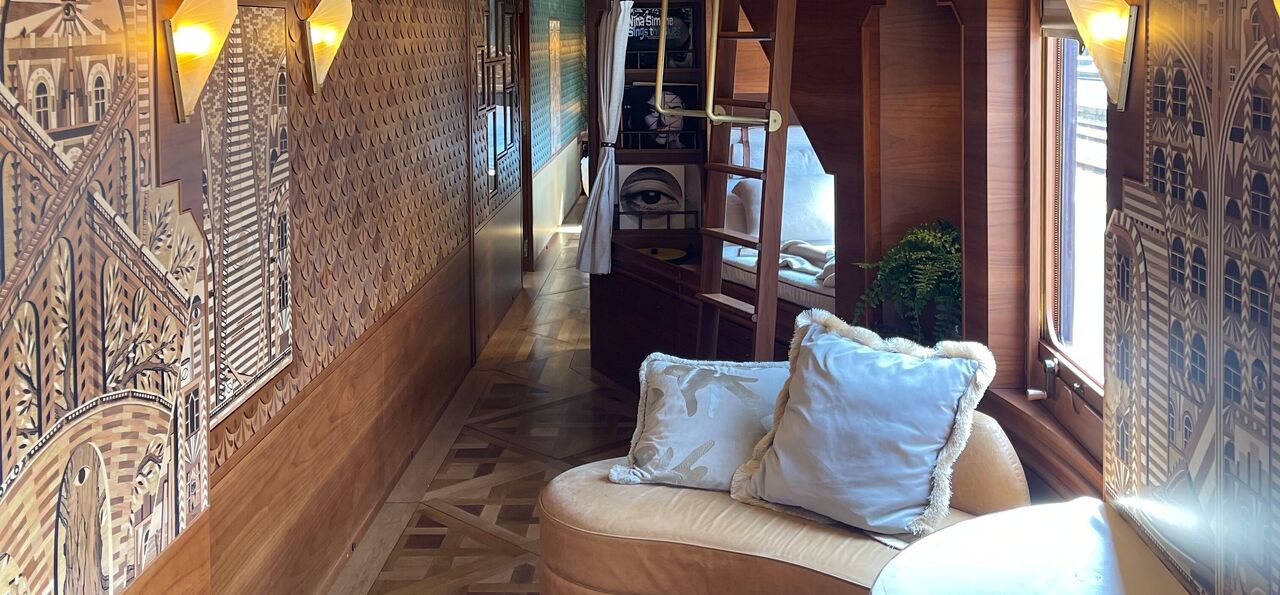
Finally, we were kindly offered a tour of L'Observatoire, the extraordinary new carriage created by French artist JR. Added to the Venice Simplon-Orient-Express in 2025, it is the train's most spacious accommodation and feels less like a conventional luxury suite and more like a piece of art that happens to travel by rail. The carriage is filled with intricate craftsmanship and hidden details, from the marquetry and curved interiors to secret compartments and a library concealed behind a hidden door. The bedroom has a generous double bed and an opening oculus in the ceiling, allowing guests to look up at the sky as the train travels through Europe. There is also a beautiful marble bathroom with a freestanding bathtub, while the private lounge and dining area comes complete with a record player and vinyl collection.
What I particularly liked was that L'Observatoire doesn't simply take the concept of luxury and make everything bigger. It is much more playful than that. There is a sense of discovery throughout the carriage, with details that only reveal themselves if you take the time to look. Having travelled in a Historic Cabin, it was fascinating to see the contrast. Our cabin had given us the charm and authenticity of the original Orient-Express, while L'Observatoire takes that heritage in a much more contemporary direction, with JR essentially using the carriage as his canvas.
After disembarking at Gare d'Austerlitz, the journey wasn't quite over. We grabbed a taxi across Paris to Gare du Nord, where we caught the Eurostar back to London. It was a slightly surreal way to end the trip: less than 24 hours after leaving Verona aboard the Venice Simplon-Orient-Express, we were sitting on a very modern train heading back to London.
Two visits to Verona in one summer gave me two very different experiences of the same city. The first was about slowing down and enjoying Verona itself: its history, food, wine and extraordinary opera tradition. The second was about using the city as the starting point for something altogether more unusual. I would happily return to Verona for a third time without needing much of an excuse. It is a city that works exceptionally well for a short break because you can experience a lot without feeling that you have to rush. The historic centre is compact, the food and wine are excellent, and there is enough history to keep even the most enthusiastic sightseer occupied. At the same time, it is easy to escape the main attractions and find quieter streets, local restaurants and places where you can simply sit down and watch the world go by.
The Due Torri is also a particularly good fit for the city. Its location makes exploring easy, but more importantly, the hotel's history and traditional character make staying there feel like part of the Verona experience. The Venice Simplon-Orient-Express was, inevitably, something different. There are faster and considerably cheaper ways of getting from Verona to Paris. If transportation is your only objective, this is probably not the journey for you. But, of course, that isn't really what you are buying – the Orient-Express is about the occasion. It is about watching the train arrive at the station, stepping aboard and being shown to a cabin that feels as though it belongs to another era. It is dressing for dinner, eating beautifully prepared food while the landscape passes outside, listening to jazz in the Bar Car and eventually falling asleep as the train carries you through Europe.
Ultimately, the two trips were very different, but both reminded me why I enjoy this part of the world so much. Verona is a city I would happily return to again and again, while the Venice Simplon-Orient-Express is an experience that deserves to be savoured rather than simply ticked off a list.